Serial Killers

More Article »

Crime News

More on this category »

Notorious murders

More on this category »

Historical Crimes

More on this category »

Crime and punishment

More on this category »

Crime History

More on this category »

Unsolved

More on this category »

Young killers

Showing posts with label Crime News. Show all posts

Steubenville sexual assault case gets international attention after video goes viral

Sunday, January 6, 2013

STEUBENVILLE, Ohio -- The story of a reported rape in the small Ohio Valley town of Steubenville that started last summer with the vulgar Tweets of a few teenaged athletes has gone viral around the world.

A recently released video of a teen joking about the attack has added fuel to the story that was first reported by The Plain Dealer in September. A photo of the girl being dragged has also rapidly spread over the Internet.

National media reports and a steady drumbeat of attention by bloggers and recently the hacker activist group, Anonymous, has kept the case in the spotlight, with some claiming that the community is protecting its high school football players at the expense of justice for the girl.

Two 16-year-old “Big Red” football players are charged with raping a West Virginia girl and one of the teens is charged with photographing her nude. They are set to be tried in Juvenile Court in February.

Attorneys for the two football players have said the level of attention is jeopardizing their right to a fair trial and that some of the evidence, such as the photos, have been taken out of context.

Debate about the reported attack divided the football-fueled town of 18,000 between those who supported the athletes and those who were appalled at the treatment of a young woman.

In recent weeks, Internet sleuths such as the Anonymous group, are questioning whether there was an attempted cover-up by politically-connected public officials and football boosters in the case, and whether the police and state investigators have the adequate skills and motivation to unearth digital evidence to charge everyone involved.

As a part of the crusade, they have hacked into the independently run student athletics site rollredroll.com, and the emails of the site’s operator Jim Parks and an assistant football coach.

They also have released dossiers on other officials in the town and what the hackers believe their connections are to the case.

Many of the officials and athletic backers have publicly called the conspiracy assertions absurd and say the hackers are unfairly maligning the whole town.

“The outrageous claims they made while controlling this site were totally false, completely absurd, and totally unfounded,” said a message on the athletics site, which is not affiliated with the school district. “They were clearly both libelous and slanderous, and were not even intended to reveal truth, but rather simply to get media attention and terrorize the Steubenville community.”

At Dec. 29 rally at the Jefferson County court house, hundreds of peaceful protesters gathered to support the 16-year-old victim and chanted for Steubenville Head Football Coach Reno Saccoccia to resign.

Saccoccia told The Plain Dealer in August that he was unaware of social media activities of his players or that they were drinking and partying. But he has defended the character of the football players in court, a move that disturbed some.

Another rally is scheduled for today at noon.

The Plain Dealer first wrote about the case on Sept. 2, about two weeks after the rape was reported to Steubenville police by the teen girl’s parents. At that time it quickly became one of the most viewed stories on the paper’s affiliate, cleveland.com.

Then in December, The New York Times did a similar story, which drew the attention of members of the hacker groups.

Attorney General Mike DeWine, whose office is leading the investigation and prosecuting the case, fielded questions on CNN yesterday.

He later told The Plain Dealer that his office continues to gather evidence in the case but will not try it in the media. He warned that not all the evidence being disseminated on the Internet is true.

DeWine took over the case in the fall after the local prosecutor Jane Hanlin stepped aside because of conflicts — her son plays on the football team.

The attorney general would not comment on the scope of the investigation and whether it would look at allegations that adults in positions of power with the football program or elsewhere obstructed or tried to cover-up evidence.

“We certainly see what’s up on the Internet,” DeWine said, adding the investigators decide what is worth following up on.

“Some of the allegations might be irrelevant,” he said. “People can do bad things that are not criminal. We are confined to the criminal law. When we judge what to run down and not rundown, we do it with that reference point,“ he said.

DeWine and Steubenville Police Chief Bill McCafferty have had to deflect online criticism that the case hasn’t been thoroughly investigated in terms of evidence recovered from iPhones and from the Internet.

McCafferty has said that detectives scoured the Internet and saved volumes of information but that not all of it could be used in the criminal case.

A state analyst testified at a hearing in the case that they were unable to recover evidence from Apple phones confiscated from some of the students. Only two photos attached to text messages were recovered from one of the accused football players’ phones.

“We have as good of experts as anywhere,” DeWine said. “Our BCI lab does this everyday of the week. If it can be retrieved we will have it.”

This week, the hackers released video of a former Steubenville student ranting about the victim in the case — who he refers to throughout as “the dead girl.” The girl was apparently unconscious. Testimony in Juvenile Court indicated that she and the boys were drinking at several parties that night.

After the girl’s parents reported the rape in August the 12-minute video was deleted from YouTube, though evidence of its existence was preserved by blogger and social media analyst Alexandra Goddard on her web site Prinniefied.com.

DeWine said investigators were aware of the video from the beginning and they would be the ones to decide whether to factor it into the case or not.

DeWine called the video “disgusting” and said he worries that the victim “continues to be victimized by diatribes.”

The student, who now attends Ohio State University didn’t respond to calls or emails about the video last summer and could not be reached this week.

The video recorded at the home of another student whose party the football players and the reported victim had attended that night contains dozens of distasteful references about the attack.


A few other teens in attendance seem to be upset about what is being said, but others laugh.

The video quickly went viral and national outlets such as CNN and the Huffington Post picked up on the story.

The attorney for the family of the 16-year-old West Virginia teen told national media outlets, including CNN that she is in counseling and is “doing as well as one can expect.”

Prosecutors said she remembers little of the attack and only became aware of its extent through the statements and photos online.

“She’s trying to go about her life right now, which is difficult because of all the media attention,” family attorney Robert Fitzsimmons has said.

One woman who plans to attend today’s rally said she wants to see the culture that allowed the attack to happen change. The woman, who has lived in the area her whole life and was sexually assaulted years ago, said she isn’t optimistic.

“It’s not going to happen overnight,” she said. “But I’m hoping it does happen.”

Katie Hanna, of the Ohio Alliance To End Sexual Violence, has been monitoring the case since August.

The viral video, in addition to coverage of the rape and murder of a woman in India by multiple men and the failure of Congress to re-authorize the Violence Against Women Act all show that we still live in a culture that supports rape, Hanna said.

Hanna pointed out Steubenville has no sexual assault prevention programs in the schools and there is no money to pay for it. Less than half of Ohio’s 88 counties even have rape crisis services available at all, she said.

"With dedicated resources for core services and prevention, relationships could be built over time to address the systemic culture of rape that exists in Ohio and nationally," she said.

Hanna said her agency has gotten calls on their resource line following recent media attention, with some survivors talking about what happened for the first time, as well as others reporting that they were not believed when they told someone else what happened.

"Out of respect for all survivors, the attention needs to be placed on the offenders and on the actions we can each take as a culture to prevent rape from occurring in the first place and supporting survivors when a crime has been committed," she said.

Continue Reading | Comment (3)

Impressionable Teen Or Terrorist?


PORTLAND, Ore. — For more than two years, the only image the public has had of the man accused of plotting to detonate an 1,800-pound bomb at a Portland Christmas tree-lighting ceremony is this: A sullen-faced, sunken-eyed terrorism suspect in a mug shot taken just hours after his arrest.

Mohamed Mohamud Trial

At the trial that begins Thursday, Mohamed Mohamud's attorneys will attempt to present a different image, one of an impressionable teenager lured by undercover agents with the FBI, which snared one of its youngest terrorism suspects with his arrest in November 2010.

At issue is whether Mohamud was entrapped, as his defense claims, when he gave the go-ahead for the detonation of what he thought was a bomb at the Christmas tree-lighting ceremony. The bomb was a fake, provided by FBI agents whom the 19-year-old thought were his jihadist co-conspirators.

It was one in a series of high-profile FBI terror stings dating back to the Justice Department's directive to ramp up its terror prosecutions and informant network after the 9/11 terror attacks.

Based on pretrial filings, one of the avenues Mohamud's attorneys are likely to pursue is based on an undisputed fact: Mohamud was a teenager when he was arrested, and his attorneys allege he was still a minor when the FBI began to focus on him.

This, his attorneys say, made him much more vulnerable to FBI enticements, and a jury should consider him an unwilling pawn of a Justice Department hungry for a conviction that demonstrates its regard for terrorism as its highest priority.

This, too, is not in dispute: Mohamud pushed a button on a cellphone that he thought would set off a bomb placed in a van and kill thousands.

The FBI alleges in court documents – and backed it up with transcripts of conversations secretly recorded by undercover agents – that Mohamud picked the time and place of the detonation. The high school graduate from Beaverton, Ore., knew the area and knew that the event would be well-attended.

"It's gonna be a fireworks show," the FBI says he told undercover agents. "A spectacular show."

Prosecutors also allege Mohamud "explained how he had been thinking of committing some form of violent jihad since the age of 15," according to the affidavit filed in connection with his arrest.

Mohamud's attorneys have a high bar to cross, said Karen Greenberg, director of the Center on National Security at Fordham Law School.

"The entrapment defense is really difficult, much more difficult when it comes to terrorism cases," Greenberg said.

Juries are being asked to weigh heavy legal questions of predisposition against more visceral evidence like secret audio recordings of the defendant praising violent jihad. "Once you're accused of terrorism (in front of U.S. juries), you're presumed to be guilty," Greenberg said.

Attorneys from both sides are forbidden from speaking about the case publicly.

For a time, Mohamud was able to live two lives – as a young immigrant trying to fit in, and a Muslim who had become radicalized.

Mohamed Mohamud's family emigrated from Mogadishu, Somalia, where he was born in 1991. He moved to the U.S. when he was about 5 years old.

Mohamud professed aspirations of becoming an engineer, like his father. As a student at Oregon State University, he spent his freshman year studying, playing basketball and partying but eventually dropped out.

As a senior in high school, Mohamud had begun writing articles for an online English-language jihadist magazine called "Jihad Recollections" under the pen name Ibn al-Mubarak, advocating physical fitness for the mujahedeen in places where they couldn't find exercise equipment.

He wrote three articles, including one praising the content and presentation of al-Qaeda's media arm, As-Shabab Media.

The FBI began monitoring Mohamud's emails. In the summer of 2010 FBI undercover agents set up the first in a series of meetings with Mohamud, who talked about a dream in which he led a group of fighters into Afghanistan against "the infidels."

According to the prosecution's version of events, Mohamud's undercover handlers offered him several choices in the service of jihad. They ranged from simple prayer to full-on martyrdom. Mohamud chose a step short of killing himself, saying he wanted to "become operational," according to the FBI.

This, they say, should show that Mohamud was more than an unwitting teenager.

Journalist Trevor Aaronson found a common thread in such sting cases, documented in a forthcoming book, "The Terror Factory: Inside the FBI's Manufactured War on Terrorism," which spends a chapter on elements of the Mohamud case.

"(The stings) all have minor variations, but they're all pretty much the same in that they involve people who don't have the capacity to commit the crimes" for which they're prosecuted, Aaronson said.

Aaronson said Mohamud didn't have access to bomb-making materials and, while he espoused anti-Western views, showed no capacity for carrying out acts of terror.

"If you're going to prosecute every loudmouth," Aaronson said, "our courts would be clogged."
Continue Reading | Comment

Mass Shootings: After 19 In Five Years - No Answers

Friday, December 14, 2012

Mass Shootings: After 19 In Five Years - No Answers
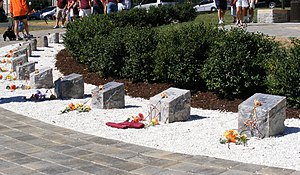
On Friday, Dec. 14, a gunman entered Sandy Hook Elementary School in Newtown, Conn., and opened fire on students and teachers, killing at least 26 and wounding others.

Though the victims were younger -- some of the 20 children killed on Friday were in kindergarten -- the massacre drew comparisons to the 2007 tragedy at Virginia Tech that left 32 dead and 17 others wounded in the deadliest mass shooting by a single gunman in U.S. history. Hundreds more have died in shootings during the five years that have passed since that devastating marker.

There is no official definition of a "mass shooting," but FBI classifications describe the term as any incident in which a perpetrator kills four or more people, not including him or herself. Under that definition, 19 mass shootings have taken place since April 16, 2007, the date of the Virginia Tech massacre. That's a rate of more than one every four months -- only considering these most brutal examples. Other devastating shootings go largely unnoticed on the national stage.

When mass shootings prompt a presidential response -- and they often don't -- the White House tends to focus on investigating the shooter's motives and encouraging people to pray or mourn for the victims. The question of how easy it is for certain individuals to buy guns is often left off the table entirely.

The tendency to approach the issue with an abundance of caution was on display on Friday, when White House Press Secretary Jay Carney gave the administration's first official comments on the incident, saying that it wasn't the day to discuss gun control policy.

It would appear that it never is.

President Barack Obama unsurprisingly left politics and policy out of his brief address on the matter Friday. He did make a promising plea for "meaningful action." Time will tell whether he can -- or will even attempt to -- translate these words into specific policy change.


Five Years, 19 Mass Shootings, No Action

Below, a list of the 19 mass shootings over the past 5-plus years, alongside the political responses, if any, to the incidents:

  • December 14, 2012 - Newtown, Conn. - 27 dead (including gunman)
  • december 12, 2012 - Portland, Oregon - 2 dead (including gunman)
  • September 27, 2012 - Minneapolis, Minn. - 7 dead (including gunman), 2 injured
  • August 5, 2012 - Oak Creek, Wis. - 7 dead (including gunman), 4 injured
  • May 31, 2012 - Seattle, Wash. - 6 dead (including gunman)
  • July 20, 2012 - Aurora, Colo. - 12 dead, 59 injured
  • February 22, 2012 - Norcross, Ga. - 5 dead (including gunman)
  • October 12, 2011 - Seal Beach, Calif. - 8 dead, 1 injured
  • January 8, 2011 - Tucson, Ariz. - 6 dead, 14 injured
  • August 3, 2010 - Manchester, Conn. - 9 dead (including gunman), 2 injured
  • November 29, 2009 - Parkland, Wash. - 5 dead (including gunman)
  • November 5, 2009 - Fort Hood, Texas - 13 dead, 30 injured (including gunman)
  • April 3, 2009 - Binghamton, N.Y. - 14 dead (including gunman), 4 injured
  • March 10, 2009 - Geneva County, Ala. -- 11 dead (including gunman), 6 injured
  • March 29, 2009 -- Carthage, N.C. - 8 dead, 3 injured (including gunman)
  • June 25, 2008 - Henderson, Ky. - 6 dead (including gunman), 1 injured
  • April 16, 2007 - Virginia Tech campus, Blacksburg, Va. - 33 dead (including gunman), 23 injured
  • February 7, 2008 - Kirkwood, Mo. - 7 dead (including gunman), 1 injured
  • December 5, 2007 - Omaha, Neb. - 9 dead (including gunman)
  • October 7, 2007 - Crandon, Wis. - 7 dead (including gunman), 1 injured
  • February 14, 2008 - DeKalb, Ill. - 6 dead (including gunman, 21 injured)
Continue Reading | Comment (1)

Mass Shooting at Connecticut Elementary School

Mass Shooting at Connecticut Elementary School Sandy Hook

Sandy Hook Elementary School Shooting: Newtown, Connecticut Administrators, Students Among Victims, Reports Say

There is something very wrong at the heart of the USA that these sorts of events happen frequently.

Authorities in Connecticut responded to a mass shooting at Sandy Hook Elementary School in Newtown Friday morning, the local NBC station reports.

Police reported 27 deaths, including 20 children, six adults and the shooter, according to the Associated Press.

Following hours of uncertainty during which many media outlets reported the shooter's identity as Ryan Lanza, an official identified the suspected gunman as Adam Lanza, Ryan's 20 year old brother, according to the Associated Press. Ryan Lanza, 24, is being questioned by police in New Jersey.

Reports say that the gunman carried four weapons, and wore black clothing as well as a bullet proof vest. He died on the scene.

Unconfirmed reports say that principal Dawn Hochsprung and a school psychologist were killed, according to a parent who claimed to witness part of the attack, CNN reported.

Danbury Hospital's emergency room staff has readied its wing for the arrival of an unknown number of victims, a spokeswoman for Western Connecticut Health Network told News Times.

Reports say that the alleged shooter appeared in the building's main office at about 9:40 a.m., approximately 30 minutes after the school day began.

The initial 911 call said that students were trapped in a classroom with the adult shooter who had two guns, according to WABC.

Students were led single file from the schoolhouse to a nearby fire station. Parents alerted to the catastrophe by text messages and emails sent by the school district arrived hoping to find their children safe.

There are approximately 626 students enrolled in kindergarten through 4th grade classes at Sandy Hook Elementary, with another 46 faculty members, Newtown Patch reported.

More from the Associated Press:

By JOHN CHRISTOFFERSEN, The Associated Press

NEWTOWN, Conn. — A man opened fire inside the Connecticut elementary school where his mother worked Friday, killing 26 people, including 18 children, and forcing students to cower in classrooms and then flee with the help of teachers and police.

The death toll – 26 victims plus the gunman – was given to The Associated Press by an official who spoke on condition of anonymity because the investigation was still under way.

The shooting appeared to be the nation's second-deadliest school shooting, exceeded only by the Virginia Tech massacre in 2007, which left 32 people and the gunman dead.

Parents flooded to Sandy Hook Elementary School, about 60 miles northeast of New York City, looking for their children in the wake of the shooting. Students were told to close their eyes by police as they were led from the building.

A photo taken by The Newtown Bee newspaper showed a group of young students – some crying, others looking visibly frightened – being escorted by adults through a parking lot in a line, hands on each other's shoulders.

Students and staff were among the victims, state police Lt. Paul Vance said a brief news conference. He also said the gunman was dead inside the school, but he refused to say how many people were killed.

A law enforcement official briefed on the shooting said the gunman died from a self-inflicted gunshot wound and that one of the victims was the man's mother, a teacher. The official wasn't authorized to speak about the investigation.

A law enforcement official in Washington said the attacker was a 20-year-old man armed with a .223-caliber rifle. The official also said that police were searching a location in New Jersey in connection with the shootings. That official spoke on the condition of anonymity because the source was not authorized to speak on the record about the developing criminal investigation.

Robert Licata said his 6-year-old son was in class when the gunman burst in and shot the teacher.

"That's when my son grabbed a bunch of his friends and ran out the door," he said. "He was very brave. He waited for his friends."

He said the shooter didn't say a word.

Stephen Delgiadice said his 8-year-old daughter heard two big bangs and teachers told her to get in a corner. His daughter was fine.

"It's alarming, especially in Newtown, Connecticut, which we always thought was the safest place in America," he said.

Danbury Hospital was the only hospital to take in victims from the shootings, admitting three patients. Doctors said at a news conference they cleared four trauma rooms to treat shooting victims.

Mergim Bajraliu, 17, heard the gunshots echo from his home and raced to check on his 9-year-old sister at the school. He said his sister, who was fine, heard a scream come over the intercom at one point. He said teachers were shaking and crying as they came out of the building.

"Everyone was just traumatized," he said.

Richard Wilford's 7-year-old son, Richie, is in the second grade at the school. His son told him that he heard a noise that "sounded like what he described as cans falling."

The boy told him a teacher went out to check on the noise, came back in, locked the door and had the kids huddle up in the corner until police arrived.

"There's no words," Wilford said. "It's sheer terror, a sense of imminent danger, to get to your child and be there to protect him."

Melissa Makris, 43, said her 10-year-old son, Philip, was in the school gym.

"He said he heard a lot of loud noises and then screaming. Then the gym teachers immediately gathered the children in a corner and kept them safe in a corner," Makris said.

The fourth-grader told his mother that the students stayed huddled until police came in the gym. He also told her that he saw what looked like a body under a blanket as he fled the school.

"He said the policeman came in and helped them get out of the building and told them to run," Makris said. "And they ran to the firehouse."

The White House said Barack Obama was notified of the shooting and his spokesman Jay Carney said the president had "enormous sympathy for families that are affected."


Continue Reading | Comment (5)

The Dennis Rader - BTK Serial killer Confessions

Tuesday, December 11, 2012

The Dennis Rader - BTK Serial killer Confessions

After pleading guilty to ten murders on June 27, 2005, Wichita serial killer Dennis Rader gave a chilling account of his murders in court. Appearing unmoved by the cruelty of the acts he was describing, Rader systematically described how he killed the entire Otero family and six women. He described how he followed his victims — he called them ‘projects’ — around town before finally going in for the kill. About the murder of Shirley Vian, Rader says, “I told Mrs. – Miss Vian that I had a problem with sexual fantasies, that I was going to tie her up, and that – and I might have to tie the kids up…I proceeded to tie the kids up, and they started crying and got real upset. So I said oh, this is not gonna work, so we moved ‘em to the bathroom. She helped me…then I proceeded to tie her up. She got sick, threw up. Got her a glass of water, comforted her a little bit, and then went ahead and tied her up and then put [a bag] over her head and strangled her.” Videos and a full transcript of the confession can be seen below.

BTK Confession, Part 1 - the Otero Family Murders


BTK Confession Part 2 - Kathryn Bright


BTK Confession Part 3 Shirley Vian


BTK Confession Part 4 - Nancy Fox


BTK Confession Part 5 - Marine Hedge, Vicki Wegerle


BTK Confession Part 6 - Dolores Davis


BTK Confessions

Continue Reading | Comment (3)

Serial killer in Anchorage case 'enjoyed telling us details'

Saturday, December 8, 2012

Serial killer in Anchorage case 'enjoyed telling us details'
A house in Constable, N.Y., searched by the FBI in October in conjunction with the Israel Keyes case. The cabin is on 10 heavily wooded acres that Keyes had owned since 1997. (For The Times, Chana O'Leary / December 7, 2012)

For months, authorities shared bagels and coffee with Israel Keyes, who promised to tell them everything about his crimes. 'It was chilling,' one officer says.

As they talked with him in a conference room at the federal courthouse in Anchorage, agents already were confident they had Samantha Koenig's abductor.

They had surveillance footage of Israel Keyes' truck parked outside of the lonely coffee stand where Koenig was working when she was kidnapped one frozen night in Anchorage. They had the ATM withdrawals the 34-year-old construction worker had made with her bank card. They had a ski mask found in the trunk of his vehicle. It wasn't long before he confessed.

It was the way Keyes confessed to the killing that day in March that turned the agents' confidence to alarm: The adrenaline was almost visible as he described how overwhelmingly powerful he felt as he pointed a gun at Koenig's ribs.

"His demeanor, the level of detail, the lack of remorse, the enjoyment he was getting out of telling certain details," recalled Kevin Feldis, chief of the criminal division for the U.S. attorney's office in Alaska.

Feldis felt a growing suspicion: "This was not the first time he killed somebody."

Over the last few months, Feldis and a team of detectives in Anchorage have been sharing jokes, bagels and coffee with the often-talkative but cagey suspect who had promised to tell them everything about his crimes.

By November, Keyes had admitted to eight slayings and hinted there were more, laying out a trail of killings, arson, robbery and sexual assault that spanned the width of the country. His death in a jailhouse suicide last week left law enforcement authorities scrambling to identify all eight victims and figure out how many others may have fallen prey to a man they now believe was a meticulous and prolific serial killer.

The FBI has banked Keyes' DNA and asked police and the public across the country to come forward with unsolved deaths, disappearances and possible sightings in an attempt to learn who his other victims may have been. A photo surfaced this week of someone who could have been Keyes robbing a bank in New York. Agents are pushing especially hard here in Washington state, where Keyes lived before moving to Alaska, and where, he told authorities, he had killed four people between 2001 and 2006.

"The investigators are going over everything. There might be more they can extract from what he already told them that they didn't think about before — maybe if they put it in a different context, it could provide something important," said Ayn Dietrich, FBI spokeswoman in Seattle.

Keyes appears to have spent many of his teenage years in the wooded hills of eastern Washington, north of Colville. He's the second-youngest of 10 siblings, many with Biblical names like Charity and Hosanna, who were instructed in homesteading skills such as carpentry and making goat milk soap. The family moved to the outskirts of an Amish community in Maine when Keyes' father grew concerned that their upbringing was not rigorous enough.

"Around the age of 11 and 12, my heart turned in rebellion toward my parents: My two older sisters and I were in a kind of revolt against them. We had friends they did not like, we secretly listened to music they forbade, and we got away with as much as we could," Keyes' sister, Autumnrose, wrote in a recent testimonial about her faith on her church's website. "I've thanked God many times for my earthly father, who was a strict man. When my sins came to light by God's mercy, he pulled me away from my circumstances and moved the family to an Amish community."

Keyes joined the Army in 1998 and was posted at the former Ft. Lewis base near Tacoma, Wash., at the time of his discharge in 2001. From there, he got a job doing maintenance and light construction in the remote Native American tribal community of Neah Bay, Wash. He had a daughter with a local woman and sought to win partial custody after they broke up.

"He seemed totally normal. He was quiet; he was more reserved, I guess, but you never would have picked him out for doing something like this.... In no sense of the word was he in any way weird," said David Kanters, who worked with one of Keyes' girlfriends.

"He would tell me about his days in the armed services and the parties they had. He would lovingly talk about his daughter, or tell me when he'd been up late because she was sick," said Jim Thompson, a volunteer who sometimes helped Keyes clean up community areas around Neah Bay.

About 2007, Keyes followed a girlfriend to Anchorage, where he started a construction company under his own name.

He was "reliable, unfailingly polite and responsive — you called, he called you back," said Paul Adelman, who had hired Keyes to do projects. "I completely trusted him with his work. If he gave me a bill, I always paid, no questions asked."

In March, shortly after he had killed Koenig, Keyes took his daughter to visit his mother and four sisters in Texas, where after Keyes' father died they had become members of the Church of Wells, which preaches strict spiritual separation from mainstream churches.

One of his sisters was marrying another member of the church. Pastor Jake Gardner later told a Texas television station that Keyes professed to be an atheist, and argued with church elders who tried to bring him into the faith.

"Even at the wedding the Lord pled with him and pled with him and in the midst of it all he wept and broke down weeping, bawling, even wailing, but he would not repent," Gardner said. "He said … to one of the pastors in the church, 'Not everybody has your morals,' with an undertone of hate and murder in his heart."

Keyes' frequent trips across the country were opportunities to stash weapons, ammunition and other material used in his fatal assaults, FBI agents said.

Keyes was perhaps 18 years old when he committed his first sexual crime, which he described as a violent assault on a teenage girl he encountered on the Deschutes River in Oregon. The attack was apparently never reported. "He intended to kill her, but decided to let her go," said Agent Jolene Goeden, who spent much of the summer debriefing Keyes whenever he was in the mood to talk.

Agents heard horrific details of Keyes' killing of Bill and Lorraine Currier in June 2011. Keyes cut the phone line to their house in Essex, Vt., broke in through the garage and tied them up in their bedroom. He took the couple to an old barn nearby, where he shot Bill Currier, then raped and strangled his wife.

"By all accounts they were friendly, peaceful, good people who encountered a force of pure evil acting at random," said Tristram Coffin, U.S. attorney for Vermont.

Keyes told detectives he would wander around isolated places like trail heads and boat docks, looking for victims.

"Back when I was smart, I would let them come to me … kind of go to a remote area that's not anywhere near where you live, but that other people go to as well," he said, in one of the interview snippets federal authorities have released. "Not as much to choose from, in a manner of speaking, but there's also no witness, really. There's no one else around."

He told the agents about robbing a bank in Tupper Lake, N.Y., in April 2009, and another one in Azle, Texas, in February. Only last week, they said, he provided a few details about two of the four killings he reported committing in Washington state.

"I think he was conflicted on telling us and not telling us. When he was telling us details, he enjoyed telling us details. It was chilling to listen to him, to watch him," said Anchorage Police Officer Jeff Bell, who worked with the FBI on the case.

Koenig was abducted at gunpoint Feb. 1 from the coffee stand where she worked, and was taken to a shed outside Keyes' home, where he raped and strangled her. Keyes took a photo of Koenig's body to make it appear she was still alive and sent it with a ransom demand. Her family raised the money through community donations, and police kept track as Keyes withdrew the cash at ATMs across Arizona, New Mexico and Texas, where he was arrested March 13.

Keyes used Google Earth to show detectives where he'd deposited Koenig's body under the ice of a lake northwest of Anchorage, allowing them to find her. Parts of the gun used to kill the Curriers were recovered from a reservoir at Parishville, N.Y., and a cache containing a shovel and two large bottles of Drano was discovered north of Anchorage.

Keyes was keenly interested in how his crimes played out in public, searching the Web for stories about his Vermont victims before his arrest. Detectives played on that in an effort to keep him talking, giving him copies of articles about his case, and letting him know when a new development was imminent.

Feldis, of the U.S. attorney's office in Alaska, said it was clear that Keyes was motivated to talk not by any wish to help victims' families, but rather to control his own narrative. He told detectives they were wasting their time if they tried to pursue leads without his help.

"There is no one who knows me — or who has ever known me — who knows anything about me, really," Keyes told his questioners in one of the video excerpts released. "They're going to tell you something that does not line up with anything I tell you, because I'm two different people, basically. And the only person who knows about what I'm telling you — the kind of things I'm telling you — is me."
Continue Reading | Comment (1)

Police videos show Chiefs' Jovan Belcher hours before his death

Police videos show Chiefs' Jovan Belcher hours before his death
Kansas City police released videos Friday evening documenting the final hours of Chiefs linebacker Jovan Belcher's life.

Footage taken from a camera mounted on the dashboard of a police cruiser shows three officers speaking with Belcher after they responded to a 911 call of a suspicious person sleeping in a black Bentley outside an apartment building on East Armour Boulevard at 3:05 a.m. CT on Dec. 1, less than five hours before he would fatally shoot his girlfriend and then himself.

Belcher cooperated with officers and told them he was heading inside to see a woman who lived in an apartment on the corner of East Armour and Holmes St. When officers determined Belcher would not be driving, he was allowed to go inside.

Belcher was not arrested nor cited, though a police spokesman told USA TODAY Sports earlier this week that officers determined Belcher had been drinking.

"You know you've got a lot riding on this," an officer told Belcher. "You know you've got a lot to lose."

Belcher thanked the officers and said, "I really appreciate it," before he went inside the building.

Police say Belcher killed his longtime girlfriend, Kasandra Perkins, later that morning after an argument in their home, and then committed suicide in the parking lot of the Chiefs practice facility just after 8 a.m.

The dashboard video adds to the timeline of Belcher's final hours, in which he was out partying in the Power and Light District with a woman who was not Perkins.

Police did not name that woman, though the New York Post identified her as Brittni Glass. She is not visible on the video.

While approaching Belcher's car — the Bentley's taillights seem to be on in the video — officers first shined their flashlights inside the windows and eventually knocked on the driver's side window to awaken Belcher, whom police earlier this week said had been sleeping.

On the audio from the police cruiser, officers are heard asking Belcher where he was headed. Belcher's response is inaudible, but the officer confirmed with Belcher that he would not be driving.

"You just need to go upstairs, dude," one officer said. "We're trying to cut you a break here."

Belcher, wearing jeans, a gray shirt, a black jacket and white shoes, got out of the car and spoke to officers for several minutes. Several times he is heard mentioning that he was not driving his car when police found him.

Police also released the dashboard video and dispatch audio from officers responding to Arrowhead Stadium after receiving a call that a man was in the parking lot with a gun. Before officers even arrived, they had confirmation that the shooter at Crysler Avenue was Belcher.

"Who is Belcher? I don't know him. Is he white, black?" an officer is heard saying as a cruiser approached the stadium.

An officer sped through the parking lot around the stadium before stopping outside the Chiefs practice facility. After parking, the officer ordered other police vehicles to silence their sirens as the officer approached the parking lot on foot. The officer said he had a visual of Belcher and others who were negotiating with him outside of one of the building's entrances.

A dispatcher said Belcher was outside of the player's entrance.

Continue Reading | Comment (3)

Israel Keyes, Admitted Alaska Serial Killer Found Dead, Linked To 7 Slayings

Tuesday, December 4, 2012

Israel Keyes
This undated handout photo provided by the Anchorage
 Police Department shows Israel Keyes. Keyes, 
charged in the death of an Alaska barista, has 
killed himself, and authorities say he was linked to at
 least seven other possible slayings in three other states. 
Keyes was found dead in his Anchorage jail cell Sunday, 
Dec. 2, 2012. Officials say it was a suicide.
ANCHORAGE, Alaska — Israel Keyes, in jail for the killing of an Alaska barista, gradually began confessing to investigators that he had killed others: a couple in Vermont, four people in Washington state, someone in New York.

But he was slow to come forward with details, warning investigators he would stop talking if his name was released publicly.

"He was very, very, very sensitive to his reputation, as odd at that sounds," Anchorage Police Chief Mark Mew said. "We had to keep things extra quiet in order to keep him talking with us."

Keyes committed suicide in an Alaska jailhouse Sunday, leaving behind an incomplete picture of a loner who traveled the country for more than a decade, picking victims at random and methodically killing them. Officials believe there are more victims in other states, but they may never know who they are.

Authorities wouldn't say how Keyes killed himself, only that he was alone in his cell. They also did not say whether he left a note.

"We're going to continue to run down leads and continue our efforts to identify his victims so we can bring some closure to the families," said Mary Rook, the FBI supervisor in Alaska.

While under arrest in connection with the disappearance of 18-year-old barista Samantha Koenig, Keyes confessed to the deaths of Bill and Lorraine Currier, of Essex, Vt., who disappeared in June 2011, authorities said. Keyes confessed to other killings without identifying the victims or saying where their remains were located.

The FBI said Monday that Keyes is believed to have committed multiple kidnappings and murders across the country between 2001 and his arrest in March, often flying to an airport, then driving hundreds of miles before targeting victims.

In interviews with investigators, Keyes detailed extensive planning, including burying caches of weapons at various points across the United States. The FBI says it recovered weapons and items used to dispose of bodies from hiding places just north of Anchorage and Blakes Falls Reservoir in New York.

Keyes told investigators he scoped out potential victims at remote locations including campgrounds and cemeteries. He said few of his earlier cases received media attention until the Currier case, telling investigators that one victim had been found but incorrectly labeled as accidental. The FBI says it does not have a name or location in this case.

Keyes also told authorities he robbed several banks to pay for his travel, using money he made as a general contractor as well.

"There's no indication that he was lying," FBI spokesman Eric Gonzalez said, adding that Keyes' DNA has been put in an FBI database available for other law enforcement agencies to use in their own investigations.

Also on Monday, officials at a news conference in Vermont said Keyes described details of the Curriers killings that had not been released publicly.

Authorities said Keyes flew from Alaska to Chicago, then drove to Vermont and picked the Curriers, a couple in their 50s.

He broke into their home and, in their bedroom, Keyes told police, he bound them with zip ties, forced them into their car and drove them to an abandoned house, where he shot Bill Currier with a gun he brought from Alaska, and then sexually assaulted and strangled Lorraine Currier.

Keyes told investigators he chose the Curriers' home because it had an attached garage, no evidence of children or a dog, and the style of the house clued him in to the probable location of the master bedroom.

Keyes previously lived in Washington state before moving to Alaska in 2007 to start a construction business. He also owned property in upstate New York, near the Canadian border.

Ayn Dietrich, a spokeswoman for the FBI in Seattle, said agents are reviewing unsolved murders across the state to determine whether Keyes might have been responsible.

The FBI has consulted with behavior specialists to develop insight into Keyes' personality.

Their analysis is incomplete, but they know he was a loner who didn't have a clear pattern in selecting victims, who varied in gender and age.

Keyes told investigators that he was "two different people."

"The only person who knows about what I'm telling you, the kind of things I'm telling you, is me," he said, according to a March 30 police recording released by the FBI Monday.

Authorities described Keyes as methodical, in the Currier case taking days to find the perfect victim. He was also thorough in disposing of victims' bodies. Only Koenig's body has been recovered.

The FBI contends Keyes killed Koenig less than a day after she was kidnapped. Her body was recovered April 2 from an ice-covered lake north of Anchorage. Her disappearance gripped the city for weeks.

A surveillance camera showed an apparently armed man in a hooded sweat shirt leading her away from the coffee stand. Koenig's friends and relatives set up a reward fund and plastered the city with fliers.

Prosecutors said Keyes stole the debit card from a vehicle she shared that was parked near her home, obtained the personal identification number and scratched the number into the card.

After killing Koenig, Keyes used her phone to send text messages to conceal the abduction. He flew to Texas and returned Feb. 17 to Anchorage, where he sent another text message demanding ransom and directing it to the account connected to the stolen debit card, according to prosecutors.

Keyes made withdrawals from automated teller machines in Alaska, Arizona, New Mexico and Texas before his arrest in Texas, according to prosecutors. He was charged with kidnapping resulting in Koenig's death. Keyes could have faced the death penalty in her case.

Koenig's family said there was no apparent previous connection between the teenager and Keyes. Reached by phone Sunday, Koenig's father, James Koenig, declined to comment on Keyes' death.

Marilyn Chates, Bill Currier's mother, said police contacted her some time ago to tell her about Keyes' confession and to tell her that they believed the couple's killing was random. Authorities called Chates on Sunday to tell her of Keyes' suicide.

"After some thinking, our family has been saved the long road ahead – trials, possible plea agreements and possible appeals – and perhaps this was the best thing that could have happened," she said.
Continue Reading | Comment (1)

Jersey Bridgeman: Girl Killed While Parents Are In Jail Was 'Amazing Child'

Saturday, November 24, 2012

Jersey Bridgeman: Girl Killed While Parents Are In Jail Was 'Amazing Child'

Jersey Bridgeman endured a lot in her young life, including abuse at the hands of her father and stepmother, but school officials say she was still a happy little girl.

Now, with the couple away in prison for chaining her to a dresser last year, authorities are trying to figure out who killed the 6-year-old. Her body was found in a vacant house this week in Bentonville, a northwest Arkansas city best known as the home of Wal-Mart's headquarters.

"To find out that the girl had been abused before, to me it was like: `You've got to be kidding me,'" said Mike Poore, school superintendent in Bentonville, where Jersey attended kindergarten at Sugar Creek Elementary. "How can someone that young go through so much?"

Still, despite the hardships she faced, Jersey managed to delight those she met.

"She's an amazing child," said Mary Ley, communications director for Bentonville schools. "She'd been through a lot and still had joy."

Police in the city about 215 miles northwest of Little Rock have said they're investigating Jersey's death as a homicide, but they won't disclose how she died. In a statement Friday, they said the girl's family members have been cooperating with detectives but do not want to speak to the media "during this time of grieving" and "ask that their privacy be respected."

Authorities haven't arrested anyone in connection with Jersey's death or publicly identified any suspects or persons of interest.

"There's no reason ... for the community to be worried at this point," Capt. Justin Thompson told The Associated Press on Friday. He would not say whether authorities think someone who knew the girl killed her.

Thompson said Jersey's body was found in a vacant house two doors down from the home where she lived with her mother. He said investigators believe the girl died sometime between midnight and 6:53 a.m. Tuesday, when her body was found about 10 minutes after someone called police to report her missing.

Thompson would not say who called 911.

Authorities have searched the home where Jersey lived, the house where her body was found and the home in between the two. Thompson wouldn't talk about what evidence they collected.

Jersey's death comes almost a year after her father and stepmother chained her to a dresser in nearby Rogers.

According to court records, David Bridgeman told an investigator he cut a belt to fit around his daughter's ankle and chained her to the dresser because she got into medication and other things around the house. He and Jersey's stepmother, Jana Bridgeman, both pleaded guilty in June to false imprisonment, permitting abuse of a minor and endangering the welfare of a minor.

Jana Bridgeman is serving a 12-year prison sentence, plus three years for a probation revocation. David Bridgeman is serving an 18-year prison sentence.
Continue Reading | Comment (2)

Donna Willing Murder: Prosecutors Accused Sex Offender Robert Hill In 1970 Cold Case

Monday, November 19, 2012

Donna Willing Murder: Prosecutors Accused Sex Offender Robert Hill In 1970 Cold Case
MILWAUKEE -- Virginia Davis describes says the pain left behind by her 9-year-old sister's 1970 rape and strangulation as being like "a million holes."

Only 4 years old at the time, Davis knew little about the crime. The subject remained off-limits for the next four decades for many in a family that hoped to forget the hurt. But Davis couldn't forget, and after years seeking help to solve her sister's killing, she's preparing to face the man police believe is responsible.

On Monday, prosecutors will argue that a childhood neighbor and convicted sex offender – who they say confessed to the killing but has since recanted – should go to trial in the death of Donna Willing. With physical evidence in the case lost or destroyed, prosecutors say the will argue under the state's sex offender law that Robert Hill, 73, is a sexually violent person and must remain in custody indefinitely.

Davis says that when she was a child, her sisters would scold her for talking about Donna, warning, "You don't want to make mom cry, do you?" Most of the siblings don't discuss it even now.

But Davis needed answers. At 15 she found the courage to go to the library and read news coverage about her sister's death. Every detail discovered since has helped.

"I didn't feel like so lonely, I didn't feel so empty, I didn't feel like I had a million holes anymore," said Davis, now a mother of three who lives in suburban Milwaukee. "I just started feeling like it's easier, it's easier, it's easier now. I can talk about her now. I can speak her name."

This 1963 family photo shows Donna Willing, left, with her sisters, Susan and Barb at Christmas. Donna was raped and strangled in 1970.
This 1963 family photo shows Donna Willing,
left, with her sisters, Susan and Barb at Christmas.
Donna was raped and strangled in 1970.
Davis clearly remembers the afternoon of Feb. 26, 1970. Her big sister Donna was reading to her from a favorite book about animals as they sat on the couch. Her mother wanted Donna to go to the bakery for bread, but Virginia purposely delayed the trip, begging for one more story.

"I remember seeing out the window, it was getting dark and thinking `Mom won't make her go if it gets dark. She'll send (my brother) or somebody else. She can't go,'" Davis recalls. "We were afraid of the boogeyman and stuff back then. The boogeyman will get her if she goes out after dark."

Donna walked out at 5:15 p.m. A witness later saw her get into a green car. Less than two hours later, a man discovered her bruised and bloodied body under a car in his garage about a mile away.

Newspaper reports at the time said police had people of interest, but no leads panned out.

In 2004, Virginia Davis saw a Milwaukee Journal Sentinel story about police arresting an 83-year-old man for a 1958 murder based on DNA evidence. She called the reporter for help getting police to take another look at her sister's case.

A cold case unit that formed in 2007 did, and soon focused on Hill. He had lived next door with his wife and five children and Davis said she remembered playing with his son. She also remembered his wife, who always yelled, but not him.

Prosecutors soon discovered physical evidence in Donna Willing's case had been lost during a flood or when detectives cleaned out the evidence room in the 1990s, according to police Lt. Keith Balash. So investigators in 2008 began interviewing Hill in prison – where he was serving a 10-year sentence for sexually assaulting four children under the age of 10 between 1995 and 2002.

Hill first told police he sexually assaulted Donna after she got into his car that night, according to court documents. She began to squirm and slapped him. He became angry, afraid she would tell on him. He strangled her and dumped her in a garage. It all took about 10 minutes, he said.

In another account outlined in court documents, Hill said he molested Donna for years, picked her up and had sex with her. After she screamed, he put his hand over her mouth and strangled her.

Hill, who is now being in held a supervised facility, has since recanted both statements. Balash said Hill knew specifics of Donna's injuries that hadn't been released.

Hill's attorney, Robert Prifogle, didn't return a phone call seeking comment before Monday's hearing.

This undated family photo shows the home of Donna Willing. Donna was raped and strangled in 1970. Police have identified Donna Willing's childhood neighbor as the alleged killer: 73-year-old Robert Hill.
This undated family photo shows the home of 
Donna Willing. Donna was raped and strangled in 1970.
Police have identified Donna Willing's childhood neighbor as 
the alleged killer: 73-year-old Robert Hill.
Before her mother died in 2009, Davis finally asked why she needed Donna to go to the bakery. Her mother said she wanted to make French toast for dinner. That filled a big hole. This year, Davis met the man who discovered his sister's body – another big hole filled. She said she had blamed herself when she was younger for delaying her sister's trip until after dark, but no more.

Davis chokes up when talking about her gratitude for the cold case detectives who pursued the case.

"I want to invent or create a word and I can't come up with anything yet that is the equivalent to how I feel," she said.
Enhanced by Zemanta
Continue Reading | Comment (1)

Lyric Cook-Morrissey, Elizabeth Collins Parents Appeal To Kidnapper

Thursday, November 15, 2012

The parents of Lyric Cook-Morrissey and Elizabeth Collins, two young Iowa cousins missing for four months, have issued an open letter to whomever is responsible for the disappearance of their children.

Lyric Cook-Morrissey, Elizabeth Collins Parents Appeal To Kidnapper

The letter was published Tuesday in the Waterloo-Cedar Falls Courier. It reads:

To Whom it May Concern:
We would use your name, but we don't know who you are. Or maybe we do? Maybe you are someone who knows the girls? Maybe you are someone who just acted upon an impulse? Maybe you planned to take them? We don't know, because we don't know who you are.


But we can sort of imagine that you must not have had the things you needed to grow up feeling safe and loved. Because only someone who hurts inside would hurt another person and their family. We've all heard the saying, "Hurt people, hurt people." We believe that is true.


We are so sorry for whatever happened to you, when you were growing up. Certainly, all children do not receive all the love and care they deserve. Some are even abused by those who are supposed to have taken care of them. When that happens, it is very wrong.


Taking the girls from us has caused much pain, pain for them, pain for us and our families. Since the time you took them, maybe you've wondered more than a few times, how you could ever make it right. How to be a hero, not a monster. Things probably look pretty hopeless for a good outcome.


We want you to know that we are praying for you to do the right thing. By releasing the girls, everyone wins. Even you. The person who took them.


Imagine how it will feel to have everyone remember that you were the one person, in all the missing children cases, the one person who cared enough to let the girls go! You will not be remembered as the one who took the girls, but as the one who let them come home.


Our lives have not been the same since July 13. Please, let our girls come home to us.


Do the right thing. Be a hero.


Sincerely


Drew and Heather Collins


Dan and Misty Morrissey-Cook


Lyric Cook-Morrissey, 10, of Waterloo and her 8-year-old cousin Elizabeth Collins of Evansdale were last seen July 13, when they left their grandmother's Evansdale home on a bike ride. The girls' bikes and one of their purses were found later that day on a nature trail that runs along Meyers Lake. Despite multiple large-scale searches, the girls' whereabouts remain a mystery.

Investigators suspect the girl's were kidnapped, but have not found any evidence suggesting where they might be held. According to the Black Hawk County Sheriff's Office, investigators continue to receive tips and are following up on leads.

Also on Tuesday, the girls' family members and dozens of friends and supporters gathered at Countryside Vineyard Church in Evansdale for a prayer vigil to mark four months since Lyric and Elizabeth went missing.

Elizabeth is described as a white female, 4 feet 1 inch tall, 65 pounds, with sandy hair and blue eyes. Lyric is white, 4 feet 11 inches tall, 145 pounds, with brown hair and blue eyes.

Anyone with information on the girls' whereabouts is asked to call the tip line at (319) 232-6682 or 1-800-346-5507. Tips can also be emailed to OurMissingIowaGirls@dps.state.ia.us.
Continue Reading | Comment (2)

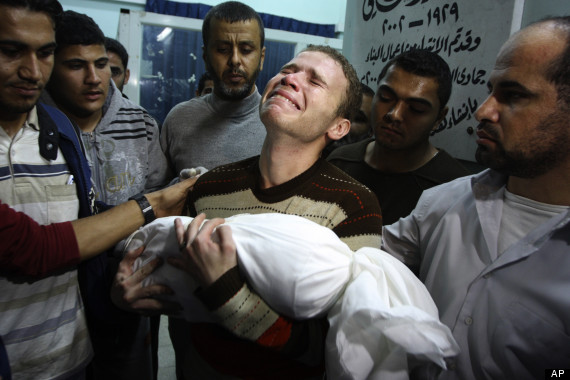
BBC ARABIC WORKER CLUTCHES BABY SON KILLED IN GAZA STRIKE


Pictures of a BBC worker cradling the body of his 11-month-old baby son after a Gaza strike have emerged online.

Jihad Misharawi, of BBC Arabic, lost baby Omar after his house was struck in Israel's air strike on Wednesday.
Jihad Misharawi weeps as he holds the body of his 11-month-old son Omar following an Israeli air strike
in Gaza City

Jihad Misharawi, of BBC Arabic, lost baby Omar after his house was struck in Israel's air strike on Wednesday.

Mr Misharawi's sister-in-law was killed and his brother was seriously injured in the attack.

BBC Foreign Editor Jon Williams this morning tweeted an image of the tragedy and a message of thanks to everyone who had sent condolences to his colleague.

The strikes came after Hamas's top military commander Ahmed Said Khalil al-Jabari was killed in Gaza on Wednesday.

Eleven Palestinians were killed in the ensuring Israeli operation, the BBC reports, although it is unknown if Mr Misharawi's son and sister-in-law are included in this figure.

On Thursday morning three Israelis were killed after rockets were fired from Gaza.
Continue Reading | Comment

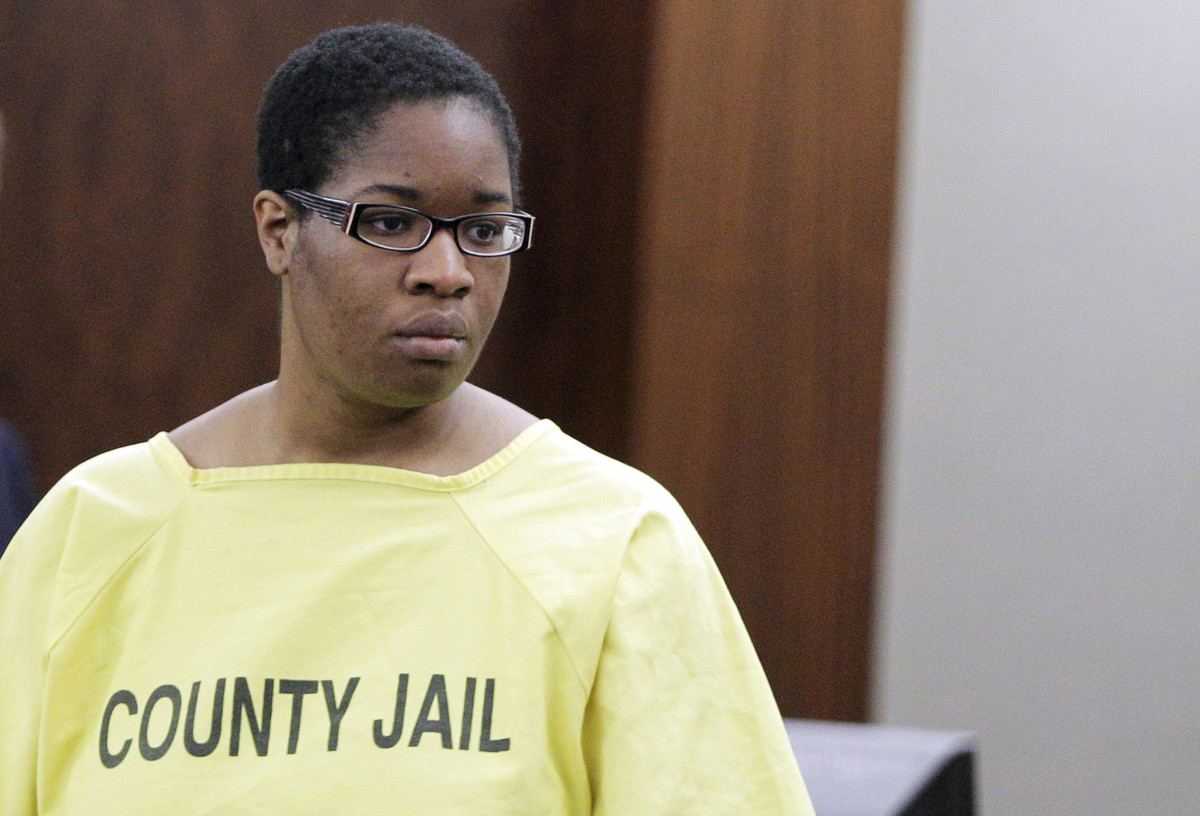
Jessica Tata's Lawyers Ready Defense In Deadly Day Care Trial In Houston

Tuesday, November 6, 2012

Jessica Tata's Lawyers Ready Defense In Deadly Day Care Trial In Houston
HOUSTON -- Attorneys for a Texas woman facing a murder charge after a fire at her home day care killed four children and injured three other kids could begin presenting their case to jurors.

However, Jessica Tata's defense team declined to say how many witnesses, if any, they planned to call Tuesday to testify in a Houston courtroom.

Prosecutors rested their case against Tata on Monday after calling about 30 witnesses over nearly two weeks.

Investigators allege that Tata had left the seven children she was caring for alone at her home to go shopping at a nearby Target store when oil in a pan ignited atop a stovetop burner that had been left on. The children in the February 2011 fire ranged in age from 16 months to 3 years old.

Tata's attorneys insist she never intended to harm the children and that she tried to save them from the fire.

Tata, 24, is charged with four counts of felony murder but is currently being tried only in the death of 16-month-old Elias Castillo. She faces up to life in prison if convicted.

During Tata's trial, which began Oct. 24, surveillance video was presented that showed her shopping at Target just before the fire occurred. A former Target manager told jurors that Tata did not seem to be in a hurry after realizing she had left the stove top burner on while the kids were at the day care.

Tata went through an orientation class in which she was told of her responsibilities as a child care provider, according to Susan Lahmeyer, a former district director of licensing with the Texas Department of Family and Protective Services, which oversees day care facilities.

"The cardinal rule in child care is supervision of children," said Lahmeyer, one of the prosecution's last witnesses.

DeGeurin, Tata's attorney, has suggested to jurors that the deadly blaze could have been sparked by a malfunctioning stove.

Neighbors testified about hearing the children crying during their unsuccessful attempts to reach them during the blaze. Parents of the children who died or were injured told jurors they had trusted Tata, believing she was qualified. Several 911 calls that were made on the day of the fire, including one by Tata, were played for jurors. Tata burst into tears when her call – in which some of the children can be heard crying in the background – was played.

Along with the murder counts, Tata was indicted on three counts of abandoning a child and two counts of reckless injury to a child.
Continue Reading | Comment (1)

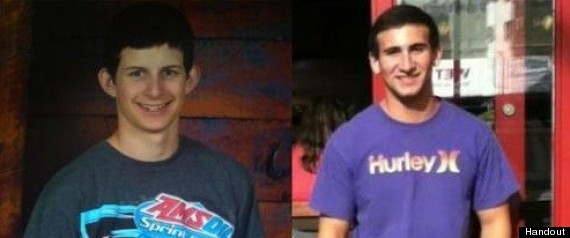
Jake Ziegler And Ray Pierce Missing: Teenagers' Car Found In S.C. River With Two Bodies Inside

Tuesday, October 30, 2012

A car containing what authorities believe are the bodies of Jake Ziegler and Ray Pierce, two North Carolina teens missing more than three weeks, was found Sunday under a highway bridge in South Carolina, police said.

Jake Ziegler, Ray Pierce: Bodies of missing N.C. teens found in car submerged in S.C. river, police say


According to Catawba County Sheriff Coy Reid, the vehicle was found by volunteer searchers from the Community United Effort Center for Missing Persons out of Wilmington, N.C. The organization spotted the vehicle upside down in the Wateree River in Kershaw County, S.C., late Sunday afternoon. The vehicle was completely submerged in the water about 30 feet from the shoreline, Reid said.

Evidence at the scene suggests the vehicle went off the left side of Interstate 20 East near the 96 mile marker. It then traveled down a steep embankment near a bridge that crosses Lake Wateree and came to rest in the river, police said.

Autopsy results are pending, but police said the license plate on the vehicle matches the one of the vehicle the teens were driving, and it's likely the two victims are the missing young people.

Ziegler, 18, and Pierce, 17, both high school seniors from Sherrills Ford, N.C., have been missing since Oct. 13.

On the morning of their disappearance, the boys told friends they planned to drive to Myrtle Beach, S.C., but would be back by the following day. Pierce sent a text message to his girlfriend at about 1:30 a.m. saying, "We're almost at the beach." No other messages were sent.

From the start of the search, investigators operated under the suspicion that the boys had been in an automobile accident. The green Pontiac in which the pair was traveling made it difficult for authorities to spot the wreckage.

The "Help find Jake Ziegler & Ray Pierce" Facebook page issued a statement late Sunday night about the latest developments.

"Please continue to pray for [the families], for this will be the hardest thing they will go through in their life."

Continue Reading | Comment
 
The World Of Serial Killers | Site map
Template Modify by Creating Website. Inpire by Darkmatter Rockettheme Proudly powered by Blogger